
Emerging Business Insights
How Your E-Mod Can Impact Workers’ Compensation Premiums
SEPTEMBER 1. 2026
A workers’ compensation experience modification factor, or e-mod, can directly impact a company’s insurance premiums. It compares a business’s loss history with similar businesses and is applied as a multiplier to increase or decrease premiums.
For many companies, the e-mod is more than a rating factor. It can influence workers’ comp costs and, in some industries, affect the ability to qualify for new projects or contracts. Understanding how the number works is an important first step in identifying where savings opportunities may exist.
- An e-mod of 1.00 is reflective of average losses and does not impact the premium
- Lower than 1.00 represents better-than-average losses and produces a credit against the premium
- Higher than 1.00 represents worse-than-average losses and produces a debit against the premium
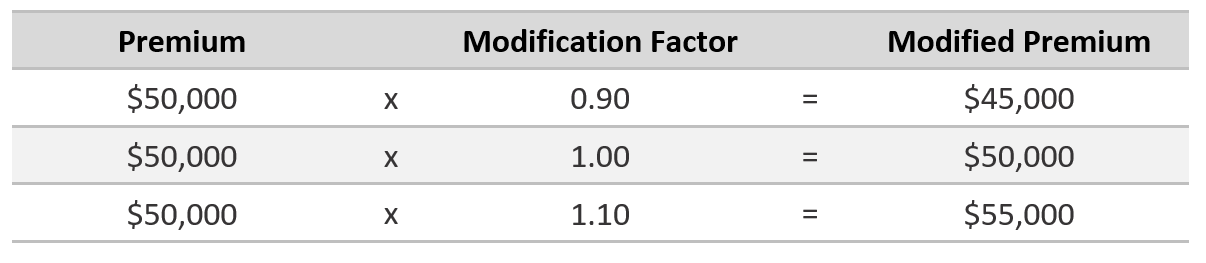
Job classifications, payroll, and claims are the key components used to determine an e-mod. An error in any one of these can result in a higher premium.
To help clients better understand the factors affecting their e-mod, USI Insurance Services provides a comprehensive analysis. We review payroll and claim accuracy, project future mods, and identify the injuries driving claim activity. These insights can help correct errors, identify opportunities for claim advocacy, and develop targeted safety and loss control initiatives. As a result, businesses can often improve their e-mod and reduce premiums — typically between 5% and 20%.
Many businesses believe that simply having an experience mod below 1.00 is the goal. But knowing how low it can be is important. The difference between the current e-mod and the minimum mod, a number unique to each business, represents the opportunity for further savings.
Real-World Example: Reducing an E-Mod Below 1.00
A general contractor was struggling to qualify for new projects because its workers' compensation e-mod of 1.13 exceeded the requirements for the contracts it wanted to pursue.
USI verified historical payroll amounts by worker classification and evaluated open claims. During the review, we identified payroll errors and a claim reserve that was set too high.
After advocating on the contractor's behalf with the insurance carrier, USI helped reduce the e-mod from 1.13 to 0.98, creating a premium savings of $7,763. The lower e-mod also allowed the contractor to bid on and win several new contracts.
How USI Can Help
USI’s e-mod review is designed to assess:
- Whether your e-mod calculation is accurate
- Which claims are driving your current e-mod and the financial impact of each claim
- The minimum e-mod specific to your business
- Claim trends that may inform loss control efforts and/or return-to-work initiatives
- Projected future workers' compensation costs
- Strategic opportunities to improve your e-mod and potentially reduce premiums by 5% to 20%
Beyond e-mod analysis, USI can also review workers’ compensation insurance programs to identify opportunities to reduce exposure and lower premium costs. To learn more about the risk management services available through USI, email select.business@usi.com.
SUBSCRIBE
Get USI insights delivered to your inbox monthly.
